Complete activated carbon line — 0.5 to 3 t/h, from shell to packed carbon
Seven stages under one design: drying, carbonization, activation, washing, drying, screening and packing. One supplier, one performance figure, one number to call when something drifts.
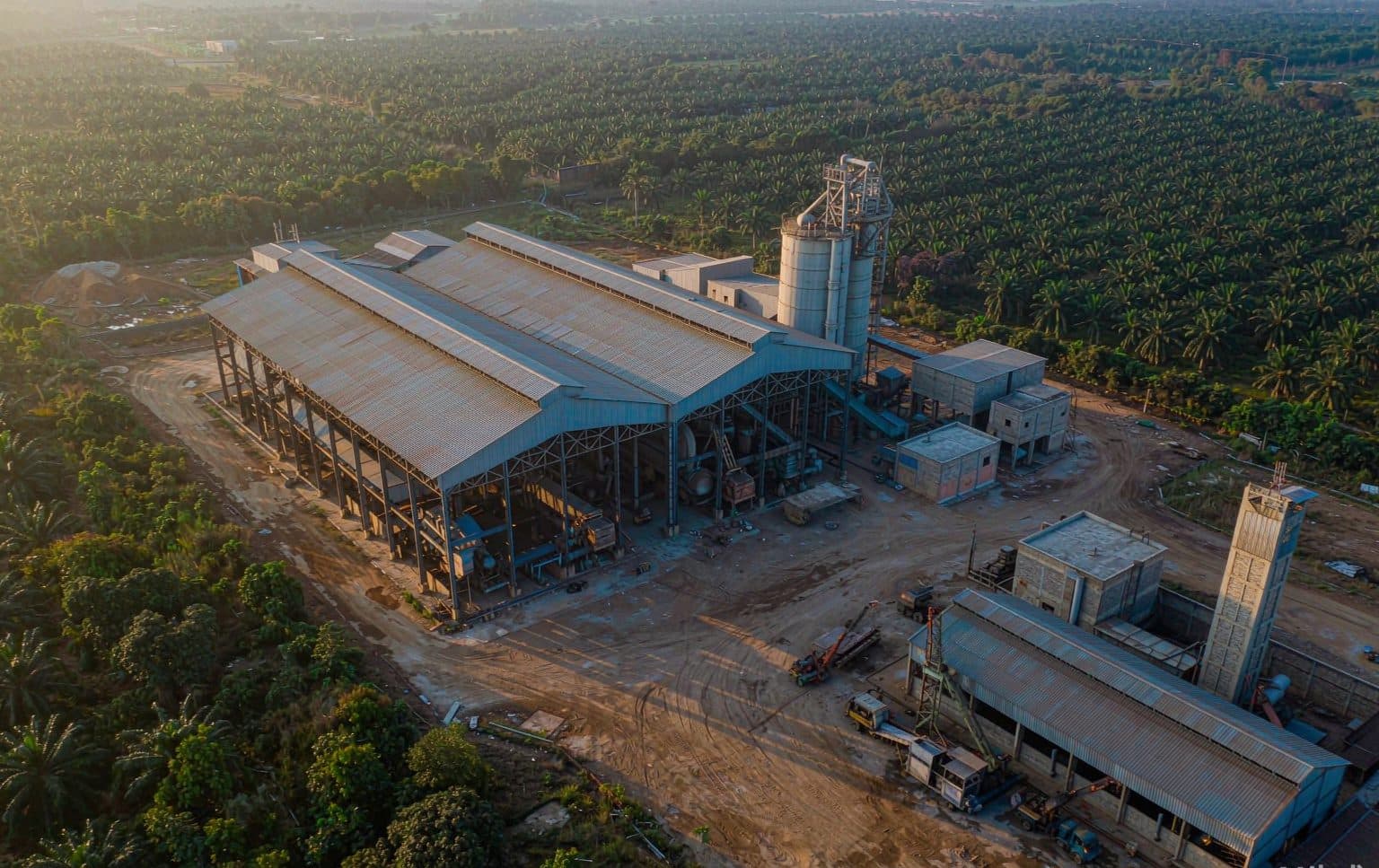
Key specifications
| Parameter | Value |
|---|---|
| Finished output | 1.0 t/h · 24 t/day · ~7,200 t/year at 300 days |
| Raw shell input | 5.0–5.5 t/h at 12% moisture |
| Total installed power | 380–450 kW |
| Steam demand | 1.8–2.2 t/h at 0.8 MPa (from waste-heat boiler where fitted) |
| Process water | 8–12 m³/h, plus 3–5 m³/h make-up for washing |
| Fuel (after start-up) | 0–40 m³/h natural gas, depending on heat recovery |
| Covered area | 30 × 32 m main bay + 12 × 20 m raw material shed |
| Tallest structure | 12 m (shaft furnace variant) / 9 m (rotary variant) |
| Operators | 2 per shift, 3 shifts |
| Delivery | 120–150 days from down payment |
| Erection and commissioning | 20–30 days, 4–6 technicians on site |
| Performance test | 72-hour continuous run at rated capacity and iodine value |
The seven stages, and what each one is for
1 · Raw material preparation
Shell is received, weighed, screened and crushed to the target band — 3–12 mm for granular product. Fines below 3 mm are separated here, not later: they are what choke a shaft furnace and what burn off in a rotary kiln.
2 · Drying
A rotary dryer brings shell from 12–18% moisture down to below 8%. Skipping this stage costs you 10–15% of carbonization throughput, because the kiln spends its heat on water instead of on pyrolysis.
3 · Carbonization
Oxygen-deficient pyrolysis at 450–550 °C, 28–34% char yield. Volatiles are burned in a secondary chamber and returned as process heat.
4 · Activation
Rotary kiln or shaft furnace at 850–1,100 °C with superheated steam. This is where iodine value and pore structure are set, and where the choice of furnace type matters most.
5 · Washing or acid treatment
Water washing removes ash and lowers pH; acid washing (hydrochloric, sometimes with caustic) is used for low-ash or food-grade product. This stage is optional and should be quoted separately, because it changes the effluent design.
6 · Drying and screening
Centrifugal dewatering then a rotary or flash dryer to below 5% moisture, followed by vibrating screens into 4×8, 8×16 and 8×30 mesh cuts. Undersize returns as product for the powder market rather than as waste.
7 · Packing
25 kg bags, 500 kg jumbo bags, or bulk. Dust extraction at the packing head is not cosmetic — it is the difference between passing and failing an environmental inspection.
Where the capital goes, 1 t/h line
| Package | Share | Note |
|---|---|---|
| Carbonization + activation main equipment | 42–50% | The two kilns, burners, drives, linings |
| Material handling and storage | 10–14% | Screening, conveying, hoppers, dryer |
| Steam and heat recovery | 9–13% | Boiler, superheater, ducting, ID fans |
| Washing, drying, screening, packing | 11–15% | Optional but usually needed for export product |
| Electrical and control | 7–10% | PLC, MCC, cabling, instrumentation |
| Environmental | 8–12% | Secondary combustion, cyclone, scrubber, dust collection |
| Erection, commissioning, training | 6–9% | Included in turnkey scope |
Build it in two phases, not one
Almost every buyer who insists on a full line from day one ends up with idle equipment. Phase one should be carbonization plus activation plus screening — enough to make and sell granular carbon. Phase two adds washing, drying and packing when the order book justifies it.
The reason is cash flow, not caution. A complete 1 t/h line takes 120–150 days to deliver and 20–30 days to commission; add financing, raw material inventory and the first shipments, and you are 8–10 months from the first invoice. Splitting the build means the kilns start earning four months earlier, and the second phase is then funded by production rather than by more debt.
The one thing to get right at phase one is space and utility capacity. Leave the footprint, the transformer capacity and the effluent routing for the washing stage, or phase two becomes a demolition project.
What a turnkey scope includes
- Process design, mass and heat balance, and equipment layout drawings.
- All process equipment from feed hopper to packing head, including linings cast and cured before dispatch.
- Electrical design, PLC and MCC cabinets, instrumentation and cabling schedules.
- Structural steel, platforms, and foundation load drawings for the civil contractor.
- Erection supervision, commissioning, 72-hour performance test and operator training.
- Two-year spare parts list and a recommended spares package.
- Capacity, iodine value and yield are written into the contract and verified at the performance test.
What a turnkey contract should never leave vague
Three numbers decide whether the plant works: the basis of the capacity figure (finished carbon or char feed), the moisture of the shell it assumes, and the iodine value at which the tonnage applies. A contract that does not state all three cannot be enforced. The contract here states all three, and the performance test is written against those three numbers rather than against a general statement of good faith.
Questions buyers ask before ordering
Straight answers with numbers. If yours is missing, send it over.
How much does a complete line cost?
How long until the line pays for itself?
Can I start with only the activation furnace and buy char?
What utilities do I need on site?
How many people to operate it?
Who handles installation?
Send the raw material, target tonnage and finished spec. You get a configuration, a utility schedule and a budget range — not a brochure.