2 t/h activated carbon line — 48 t/day, layout, utilities and budget
The sweet spot for a plant selling into water treatment at scale: one kiln, one crew, 48 tonnes a day, and a steam demand most sites can cover with a single boiler.
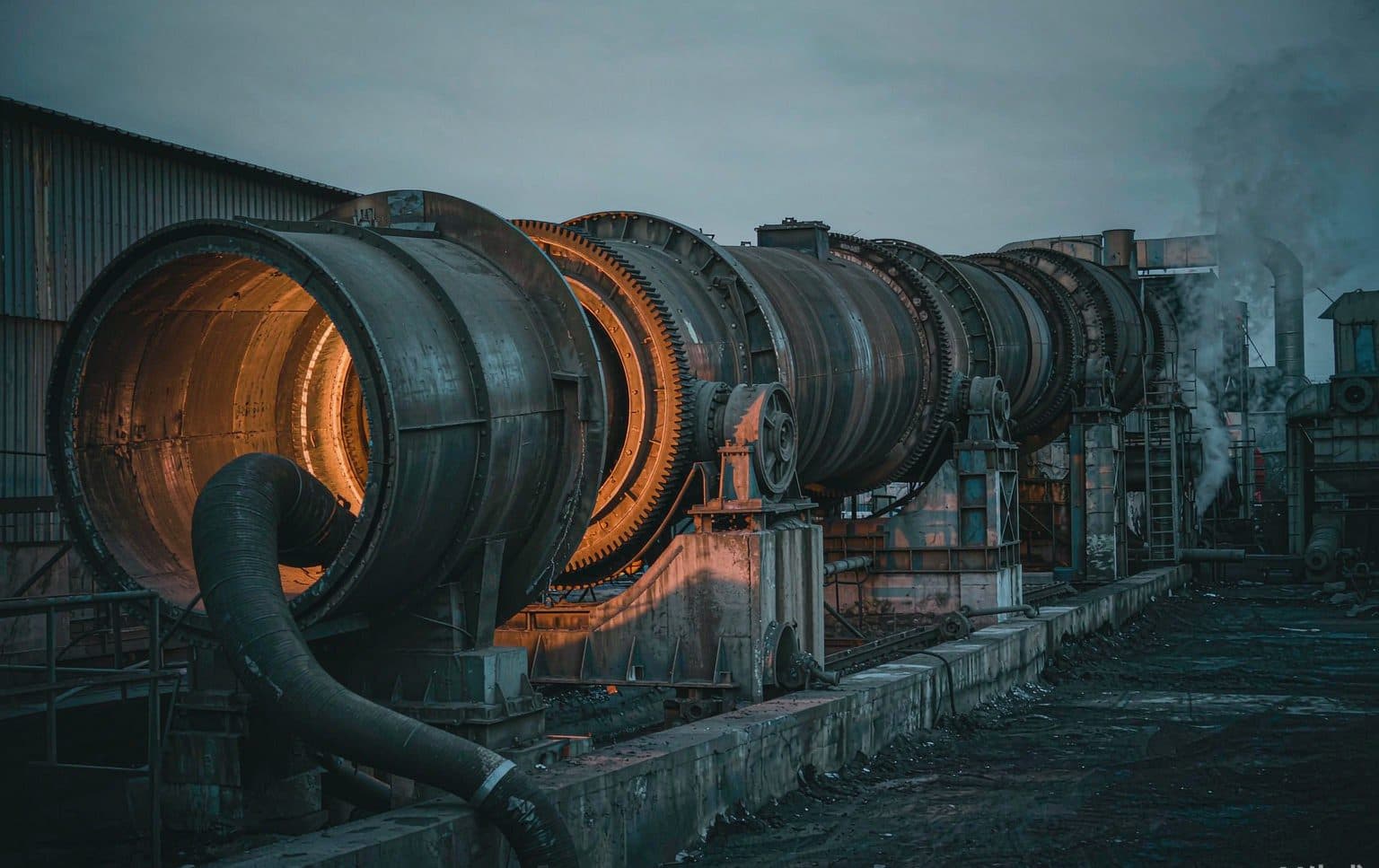
Key specifications
| Item | Requirement |
|---|---|
| Finished output | 2.0 t/h · 48 t/day |
| Char feed | 3.3–3.5 t/h |
| Steam | 3.2 t/h at 0.8 MPa |
| Fuel | Natural gas 240–300 Nm³/h |
| Installed power | 110 kW |
| Cooling water | 22 m³/h |
| Footprint, activation section | 28 × 11 m |
| Footprint, with carbonization | 42 × 16 m |
| Operators | 4 per shift, 3 shifts |
| Delivery | 100–130 days |
Why 2 t/h is the usual answer above 30 t/day
Below 30 t/day, the arithmetic usually favours a 1 t/h unit running two shifts. Above 45 t/day, most buyers are choosing between one 2 t/h kiln and two 1 t/h kilns, and the single larger unit wins on almost every measure: one lining to maintain instead of two, one control system, one crew of four instead of six, and about 12% lower fuel per tonne because the shell-to-surface ratio improves.
The constraint is utilities. A 2 t/h line wants 3.2 t/h of steam, which means a 4 t/h boiler with normal margin, and 110 kW of connected load, which sits comfortably on a 315 kVA transformer. Sites that cannot reach those numbers should stay at 1 t/h rather than derate the kiln — a 2 t/h shell run at 1.2 t/h gives worse temperature uniformity than a correctly sized 1 t/h unit.
1 t/h versus 2 t/h, side by side
| Measure | 1 t/h | 2 t/h |
|---|---|---|
| Output | 24 t/day | 48 t/day |
| Equipment cost | USD 380–520k | USD 620–820k |
| Cost per daily tonne | USD 15,800–21,700 | USD 12,900–17,100 |
| Footprint | 24 × 10 m | 28 × 11 m |
| Operators | 3 per shift | 4 per shift |
| Steam demand | 1.8 t/h | 3.2 t/h |
| Installed power | 75 kW | 110 kW |
| Fuel per tonne | Baseline | About 12% lower |
Site requirements that catch people out
- Clear height of 10 m at the kiln position — a 2 t/h shell is longer and needs more crane room during lining work.
- A concrete slab rated for 45 t static load with isolated footings; the drive end carries the torque reaction.
- Steam header sized at 100 mm, not 80 mm, or pressure at the kiln inlet drops under load.
- Truck access wide enough for a 40-foot container plus a 25 t crane, or the shell cannot be delivered.
Questions buyers ask before ordering
Straight answers with numbers. If yours is missing, send it over.
What does a 2 t/h activated carbon plant cost?
How much raw material does it consume?
Can one supervisor run both the kiln and the boiler?
Is a waste-heat boiler worth adding?
Send the raw material, target tonnage and finished spec. You get a configuration, a utility schedule and a budget range — not a brochure.