2 t/h coconut shell line, Sumatra — 1,050 mg/g at 94% availability
A charcoal trader moving downstream into activated carbon. No carbonization on site, so the whole project was sized on purchased char quality — which turned out to be the deciding variable.
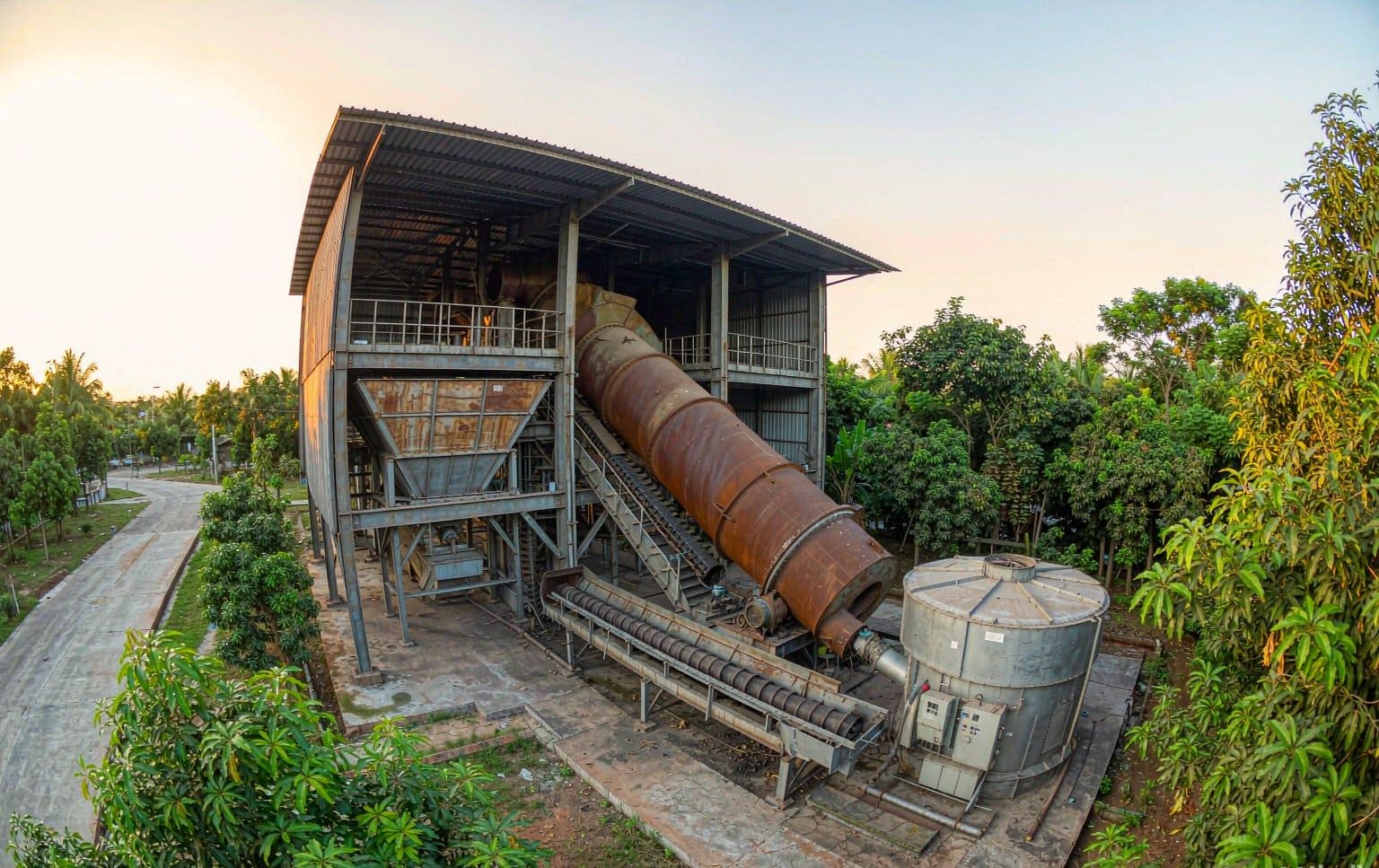
The starting point
The buyer had supplied coconut shell charcoal to activated carbon plants for eleven years and wanted to capture the activation margin. Site conditions were good: an existing covered warehouse, a 4 t/h gas boiler already installed for a nearby process, and a 630 kVA transformer with spare capacity.
What they did not have was any control over char quality. Char arrived from four different suppliers with iodine potential ranging from 780 to 1,020 mg/g, and no two deliveries behaved the same in the kiln.
What we changed in the design
The standard HL-1800 assumes a consistent feed. Here it could not be. We added a 60-tonne homogenizing silo with a blending screw, so char from different suppliers is mixed before it reaches the feed hopper, and specified a wider VFD range on the kiln drive so residence time can be adjusted by 20% without losing temperature stability.
We also wrote a char acceptance protocol into the contract: iodine potential tested on a 2 kg sample, ash below 4%, moisture below 8%, and a sieving check at 2 mm. Two suppliers were dropped in the first year because of it, which the buyer now regards as the most valuable part of the project.
What we would do differently
The discharge cooler was sized on 2 t/h at 80 °C outlet, which is correct on paper. In practice, char with higher moisture pushed the kiln harder and discharge arrived at 110–120 °C during the wet season, costing 20–30 mg/g at the end of the line. We have since made a 25% cooling margin standard on all lines above 1.5 t/h. This plant received a larger jacket in year two.
Send the raw material, target tonnage and finished spec. You get a configuration, a utility schedule and a budget range — not a brochure.