3 t/h activated carbon line — 72 t/day, layout, utilities and budget
Our largest standard model. At this size the kiln is no longer the hard part — steam, cooling and material handling are.
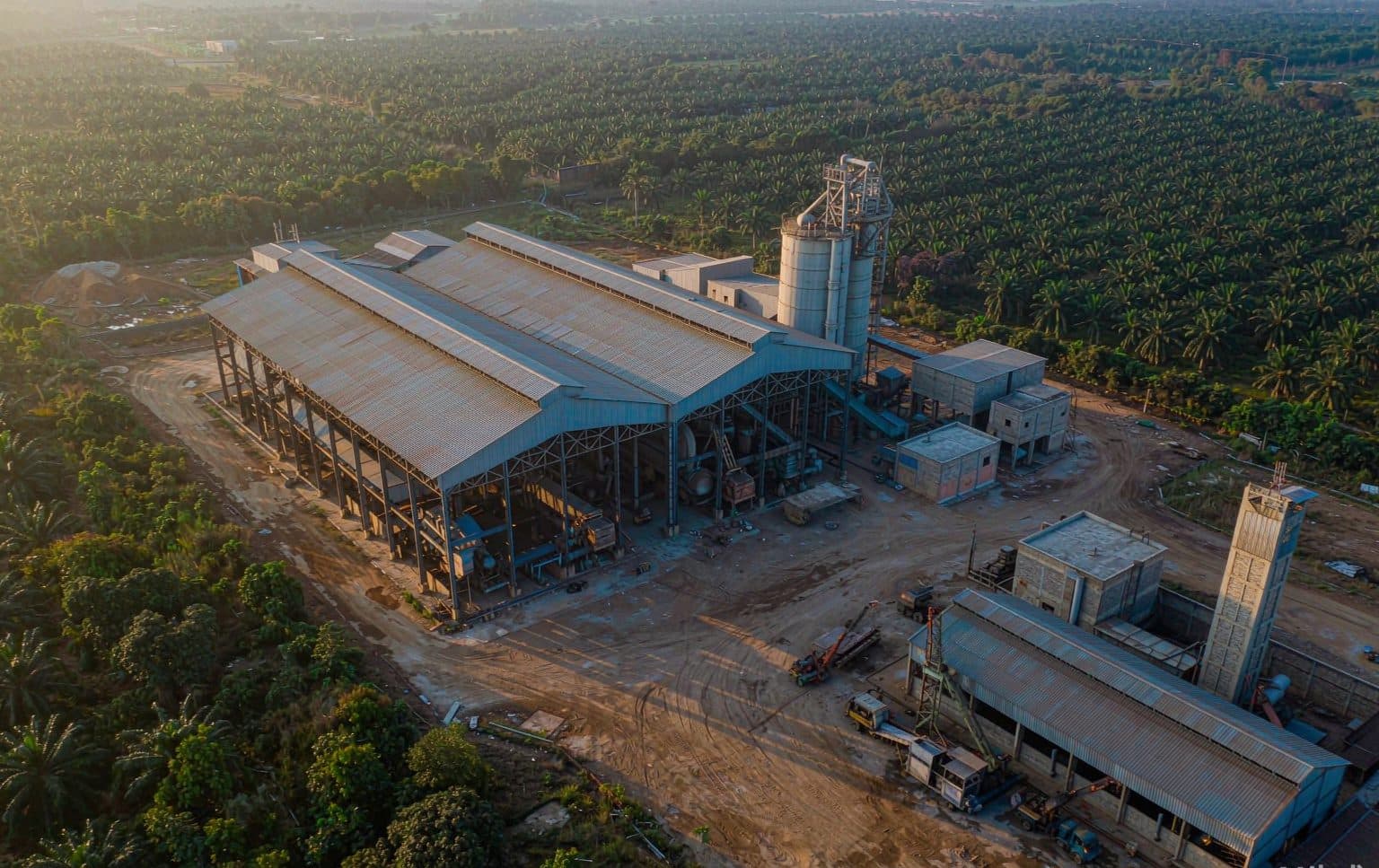
Key specifications
| Item | Requirement |
|---|---|
| Finished output | 3.0 t/h · 72 t/day |
| Char feed | 5.0–5.2 t/h |
| Steam | 4.8 t/h at 0.8 MPa |
| Fuel | Natural gas 340–420 Nm³/h before heat recovery |
| Installed power | 160 kW |
| Cooling water | 32 m³/h |
| Footprint, activation section | 34 × 12 m |
| Footprint, with carbonization | 52 × 18 m |
| Operators | 5 per shift, 3 shifts |
| Delivery | 110–140 days |
At 72 t/day, the furnace is rarely the bottleneck
Every project we quote at 3 t/h starts with the same question, and it is not about the kiln: where does 5 tonnes of char per hour come from, every hour, for 300 days? A 3 t/h line consumes roughly 36,000 tonnes of char a year, equivalent to 120,000 tonnes of coconut shell. Very few buyers have that supply chain, which is why large plants usually sit next to a char market or own carbonization capacity across several sites.
The second constraint is heat balance. Burning fuel for 4.8 t/h of steam plus kiln heat is the single largest operating cost. At this size we design the off-gas train with a waste-heat boiler as standard, recovering 2.0–2.6 t/h of steam and cutting purchased fuel by 40–50%. Projects that skip it usually retrofit within two years, at a higher price than including it from the start.
The third is cooling. 72 tonnes a day of carbon leaving the kiln at 900 °C carries a lot of heat, and an undersized water jacket shows up as iodine value loss at the discharge end, not as a temperature alarm.
Heat and mass balance at design load
| Stream | Flow | Note |
|---|---|---|
| Char in | 5.0 t/h | Dry basis, 2–12 mm |
| Steam in | 4.8 t/h | 0.8 MPa, superheated to 400 °C |
| Carbon out | 3.0 t/h | Cooled below 80 °C |
| Off-gas | about 18,000 Nm³/h | 500–700 °C at boiler inlet |
| Steam recovered | 2.0–2.6 t/h | Waste-heat boiler |
| Net fuel demand | 180–250 Nm³/h gas equivalent | After recovery |
What changes in the plant design at this scale
- Char storage with 72 hours of live capacity — at 5 t/h, a half-day interruption stops the kiln for a week of thermal recovery.
- Two discharge lines running in parallel, so a conveyor fault does not stop the kiln.
- Continuous iodine value sampling every 2 hours, not per shift; at 72 t/day a drifting batch is expensive.
- Dedicated maintenance fitter on site, with a spare drive motor and one set of rabble or lifters held in stock.
- Stack monitoring to local limits, since permitting thresholds are usually crossed between 2 and 3 t/h.
Permitting is the real lead time
At 3 t/h, environmental permitting commonly takes longer than manufacturing. Start the air-emission and wastewater application before you place the order, and confirm the stack height and monitoring requirements with the local authority — retrofitting a continuous emission monitor into a finished duct is far more expensive than designing it in.
Questions buyers ask before ordering
Straight answers with numbers. If yours is missing, send it over.
What does a 3 t/h activated carbon plant cost?
How much char does it need per year?
Can two 1.5 t/h units be better than one 3 t/h?
What steam pressure should the boiler deliver?
Send the raw material, target tonnage and finished spec. You get a configuration, a utility schedule and a budget range — not a brochure.