Coconut shell activated carbon line — 0.5 to 3 t/h, 950–1,100 mg/g
The highest-yield shell feedstock we build for. One tonne of finished carbon takes 5.0–5.5 tonnes of raw shell, and the line that does it is sized on char, not on shell.
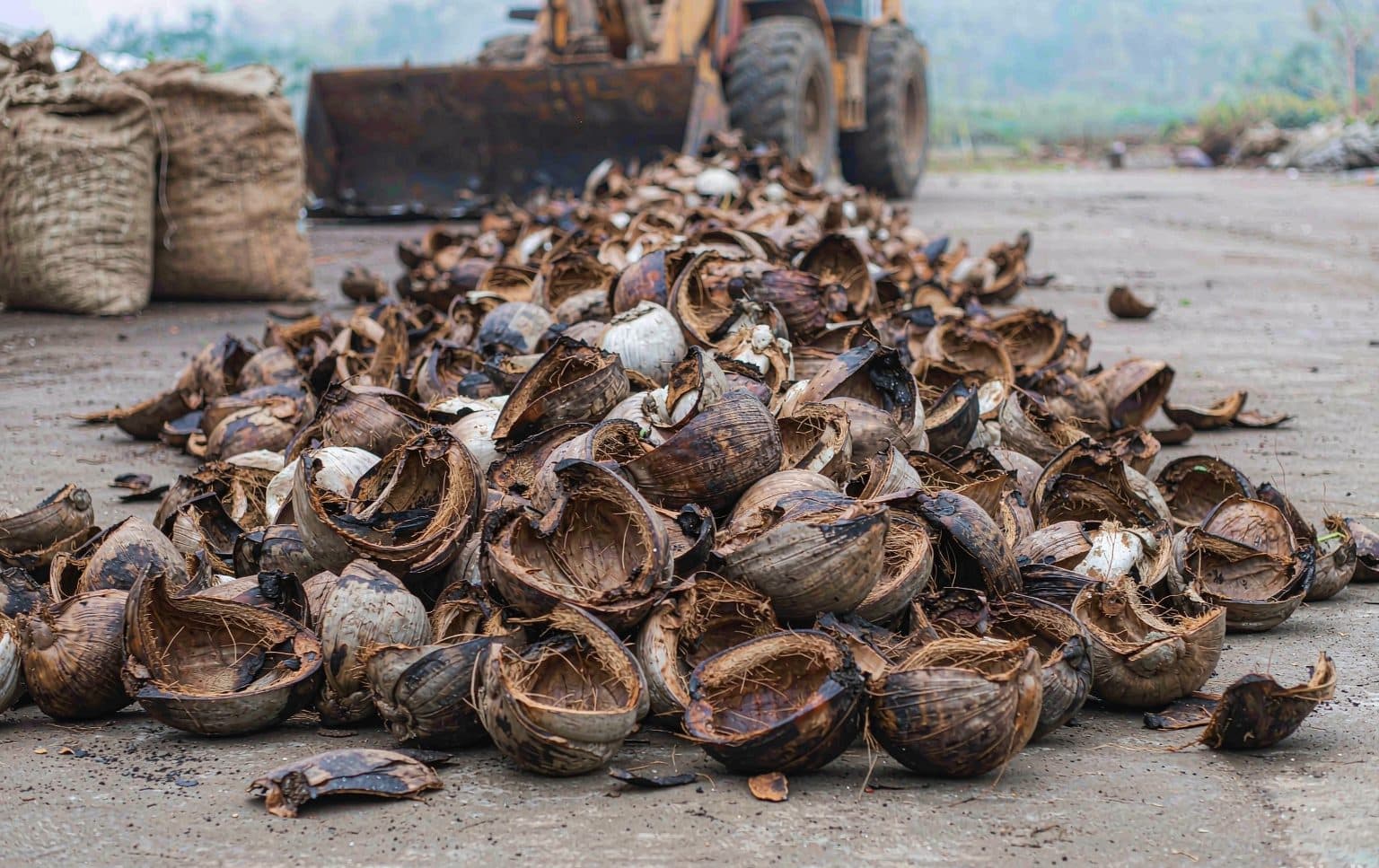
Key specifications
| Parameter | Value |
|---|---|
| Shell bulk density | 550–650 kg/m³ |
| Feed moisture (after drying) | ≤ 12% |
| Feed ash | 1–3% |
| Feed size | 2–12 mm, screened |
| Carbonization temperature | 400–500 °C |
| Carbonization yield | 28–32% shell to char |
| Activation yield | 60–65% char to carbon |
| Overall yield | 17–20% |
| Finished iodine value | 950–1,100 mg/g |
| Methylene blue | 120–200 mg/g |
| Hardness | ≥ 95% |
| Ash content | ≤ 3% |
| Bulk density (finished) | 450–520 kg/m³ |
The yield chain, tonne by tonne
| Stage | Input | Output | Yield |
|---|---|---|---|
| Shell drying | 5.4 t wet shell @ 20% H₂O | 5.2 t dry shell | 96% |
| Carbonization | 5.2 t shell | 1.55 t char | 30% |
| Activation | 1.55 t char | 1.00 t carbon | 64% |
| Screening & packing | 1.00 t carbon | 0.96 t saleable | 96% |
Why coconut shell is the reference feedstock
Coconut shell has three properties that make it the easiest shell to activate well: a naturally high fixed-carbon content, a dense and uniform cell structure, and low ash. The result is a carbon with high hardness and a micropore volume that suits water treatment and gold recovery, which is where most of the world's coconut shell carbon is sold.
It is also the feedstock where the difference between a good and a mediocre line shows up fastest. Because the char is dense, it needs a longer residence time than palm kernel char to reach the same iodine value — a kiln sized on tonnage alone will under-activate it. Our standard practice is to size coconut shell lines at 10–15% more residence time than the model table suggests, and to confirm it on your char in a trial run.
Three things to check in your shell before ordering
- Moisture above 15% at the kiln inlet: you are paying to evaporate water, and the first zone will be too short for real activation. Add a dryer, or negotiate dried shell.
- Mixed shell and fibre: fibre carbonizes faster and burns off in activation, which drags the whole batch down. Screen at 2 mm.
- Old or mouldy shell: fixed carbon falls and ash rises. Ask for a proximate analysis on the actual shipment, not a specification sheet.
Already have charcoal?
If you buy coconut shell charcoal instead of raw shell, the line is simpler and smaller: 1 t/h of finished carbon needs 1.65–1.75 t/h of char, and the carbonization kiln, dryer and their permits disappear from the project. Many buyers in Indonesia and the Philippines start here and add carbonization later.
Questions buyers ask before ordering
Straight answers with numbers. If yours is missing, send it over.
How many tonnes of coconut shell make one tonne of activated carbon?
What iodine value can coconut shell reach?
Is chemical activation better for coconut shell?
What line size suits 10 tonnes of charcoal per day?
Send the raw material, target tonnage and finished spec. You get a configuration, a utility schedule and a budget range — not a brochure.