Palm kernel shell activated carbon line — 0.5 to 3 t/h, 900–1,000 mg/g
Abundant across Indonesia and Malaysia, and harder to activate well than coconut. The two variables that decide whether your PKS carbon reaches 1,000 mg/g.
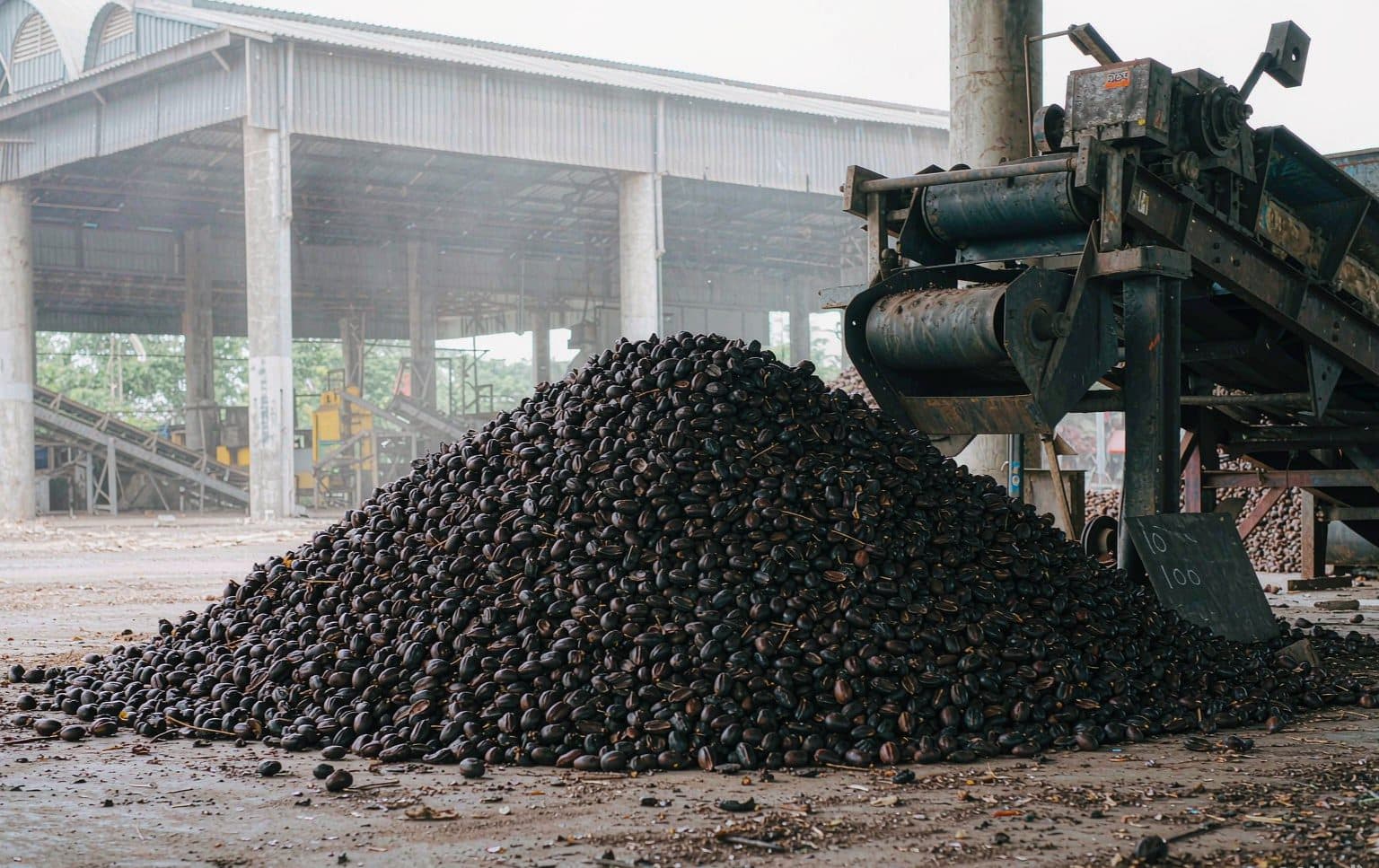
Key specifications
| Parameter | Value |
|---|---|
| Shell bulk density | 600–700 kg/m³ |
| Feed moisture | 12–18% as received |
| Feed ash | 3–5% |
| Carbonization yield | 28–32% |
| Activation yield | 60–63% |
| Overall yield | 18–21% |
| Finished iodine value | 900–1,000 mg/g |
| Hardness | 92–96% |
| Ash content | 3–5% |
| Bulk density (finished) | 480–540 kg/m³ |
The two variables that decide PKS quality
Palm kernel shell is denser than coconut shell and arrives wetter — 12–18% moisture is normal as received, sometimes higher in the rainy season. That moisture is the first variable: a kiln without adequate drying capacity spends its first zone boiling water, and activation temperature never stabilises. We size the dryer on the wet-season figure, not the annual average, and that single decision prevents most of the iodine-value complaints we hear about PKS lines.
The second variable is ash. PKS picked up from open stockpiles carries sand and grit, and ash in the finished carbon runs 3–5%. Screening at 3 mm before carbonization removes most of it. If your buyer specifies ash below 3% — common for potable water — add a wash circuit after activation, and plan for the effluent it produces.
Capacity versus shell supply
| Line size | Carbon / year | Shell needed / year | Shell / day |
|---|---|---|---|
| 0.5 t/h | 3,600 t | 18,000–19,800 t | 60–66 t |
| 1.0 t/h | 7,200 t | 36,000–39,600 t | 120–132 t |
| 2.0 t/h | 14,400 t | 72,000–79,200 t | 240–264 t |
| 3.0 t/h | 21,600 t | 108,000–118,800 t | 360–396 t |
Configuration we recommend for PKS
- Two-stage drying when moisture at intake exceeds 15% — a rotary dryer plus a buffer silo with 8 hours of live capacity.
- 3 mm screening before carbonization, with a magnetic separator for tramp metal from collection.
- Residence time set 10–15% longer than the coconut baseline; PKS char is denser and under-activates if copied directly.
- Wash circuit with settling and pH correction if finished ash must be below 3%.
- Discharge cooler sized for the higher bulk density, since the screw flights handle more mass per cubic metre.
Why PKS projects often include a power plant
PKS is also a biomass fuel, and many Indonesian and Malaysian projects pair the activation line with a shell-fired boiler or gasifier. Off-gas and shell fines then cover part of the heat demand, cutting fuel cost per tonne by 20–30%. We size the combustion chamber for dual fuel when this is planned, so the conversion does not require a new burner later.
Questions buyers ask before ordering
Straight answers with numbers. If yours is missing, send it over.
How does PKS compare with coconut shell for activated carbon?
What iodine value can palm kernel shell reach?
Do I need a wash circuit?
Can the line run on shell fines and fibre too?
Send the raw material, target tonnage and finished spec. You get a configuration, a utility schedule and a budget range — not a brochure.