Carbonization furnace — 1 to 6 t/h of shell into char, ahead of activation
Oxygen-deficient pyrolysis at 450–550 °C that turns shell into char at 28–34% yield, and burns its own volatiles to hold the temperature. Get this stage wrong and no activation furnace downstream can fix it.
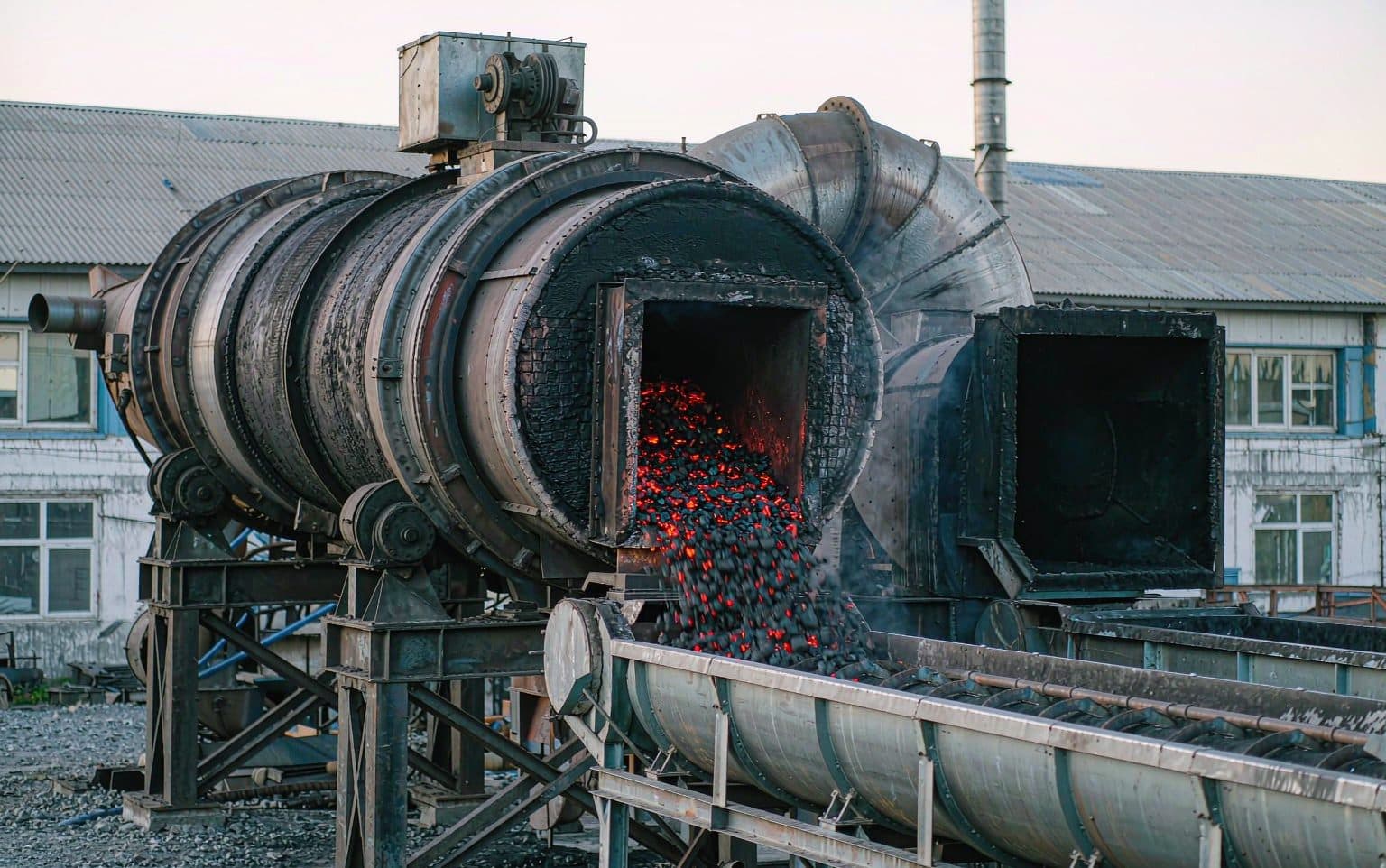
Key specifications
| Parameter | Value |
|---|---|
| Raw feed capacity | 2.0 t/h · 48 t/day |
| Char output | 0.60–0.68 t/h · 14–16 t/day |
| Shell diameter × length | 1.4 m × 14 m |
| Rotation speed | 0.4–1.5 rpm, VFD |
| Carbonization temperature | 450–550 °C, 2 zones |
| Residence time | 30–60 min |
| Heating method | Internal, volatiles combusted in secondary chamber |
| Start-up fuel | Gas, LPG, diesel or wood, first 3–4 hours only |
| Off-gas treatment | Secondary combustion at 850 °C + cyclone + scrubber |
| Refractory | High-alumina castable 230 mm + 65 mm insulation |
| Installed power | 37 kW |
| Discharge temperature | ≤ 60 °C after indirect water cooler |
| Design life | Lining 3–4 years, shell 12+ years |
Why carbonization decides the economics of the whole line
Activation gets the attention because it sets the iodine value. Carbonization sets the money. Two kilns running the same shell at 30% and 34% char yield differ by 13% in how much raw material they consume per tonne of finished carbon — and raw material is usually the largest single cost line in the plant.
On a 1 t/h finished-carbon line, that gap is roughly 0.2 t/h of shell, or about 1,400 tonnes a year at 6,000 operating hours. At USD 120–180 per tonne of shell delivered, the difference between a well-run and a badly-run carbonization stage is USD 170,000–250,000 a year. It dwarfs the price difference between kiln suppliers.
Yield is set by three things: how fast the shell is heated, how long it stays at temperature, and how much oxygen gets in. Fast heating cracks the granule and loses fines; oxygen ingress burns carbon you already paid for. Both are mechanical problems, not chemistry problems — which means they are solvable with a sealed feed, controlled rotation and a properly sized secondary combustion chamber.
Where the mass goes, coconut shell to packed carbon
| Stage | Input | Output | Yield |
|---|---|---|---|
| Drying | 5.25 t wet shell (12% moisture) | 4.62 t dry shell | 88% |
| Carbonization | 4.62 t dry shell | 1.48 t char | 32% |
| Activation | 1.48 t char | 0.88 t carbon | 59% |
| Screening and dedusting | 0.88 t carbon | 0.84 t packed carbon | 95% |
| Overall | 5.25 t wet shell | 1.00 t packed carbon | 19% |
Internally heated rotary or vertical
Two designs dominate. The internally heated rotary kiln is the common choice above 1 t/h: shell moves through a gently sloped rotating drum while a controlled amount of combustion gas passes over it. It tolerates mixed feed sizes, is easy to control and is the cheaper of the two per tonne of capacity.
The vertical carbonization furnace suits smaller capacities and single-size feed. Material descends through a heated shaft, which gives a narrower residence distribution and slightly higher yield, but it is harder to scale and less forgiving of fines.
We build both, and for most shell projects between 1 and 6 t/h we recommend the rotary unit — not because it is better in the abstract, but because it survives real feed, including the wet season when shell arrives at 18% moisture instead of 12%.
The four control points that set yield
- Feed seal — a double flap valve plus a slight negative pressure at the feed end. Air ingress here is the single most common cause of low yield.
- Rotation speed — sets residence time; slower is not always better, because too slow overheats the bed near the discharge.
- Secondary chamber temperature — hold 850 °C for at least 2 seconds so volatiles burn completely instead of forming tar that plugs the duct.
- Discharge cooling — indirect water cooling to below 60 °C. Hot char meeting air loses several points of yield in the last two metres.
Can it run without external fuel?
After 3–4 hours of start-up on gas or wood, yes — the volatiles released from shell are more than enough to hold 450–550 °C, and the surplus can be routed to a waste-heat boiler or to the activation furnace's combustion chamber. This is why a carbonization kiln is often the cheapest heat source in an activated carbon plant, and why sizing the two stages together matters more than buying either one well.
Questions buyers ask before ordering
Straight answers with numbers. If yours is missing, send it over.
How much char do I get from one tonne of coconut shell?
Do I need a separate carbonization furnace if I only want a small line?
What happens to the smoke and tar?
Can the same kiln handle palm kernel shell and hazelnut shell?
How many people does it take to run?
Send the raw material, target tonnage and finished spec. You get a configuration, a utility schedule and a budget range — not a brochure.