3 t/h palm kernel shell plant, Kalimantan — waste heat covers 46% of steam
A palm oil group using its own shell output. The furnace was the easy part; the project was really about heat integration and ash control.
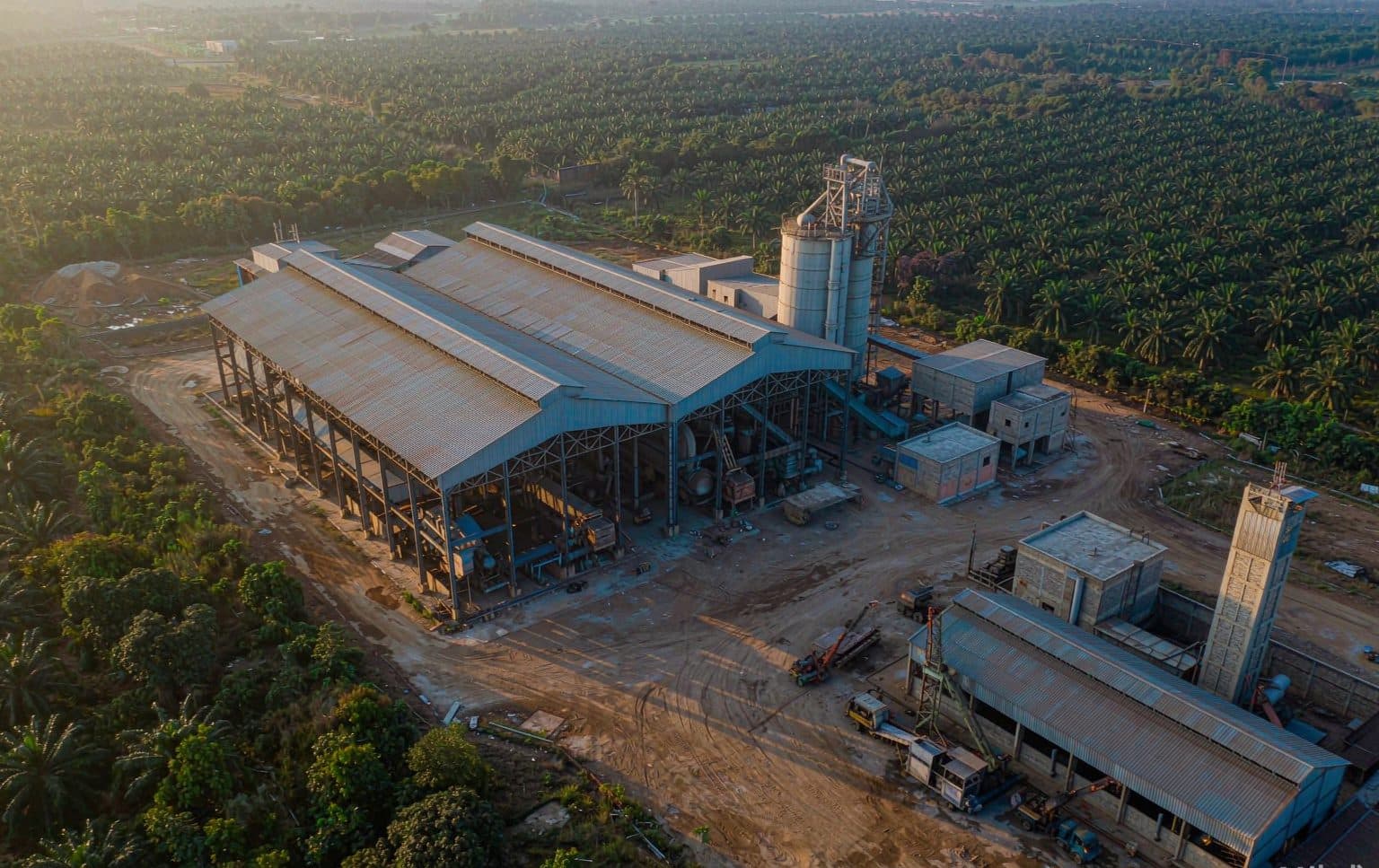
Own feedstock changes the economics
The group operates three mills within 40 km and had been selling shell at a low price. With 130,000 tonnes a year available, a 3 t/h line consumes about 110,000 tonnes — enough to justify building the plant rather than selling the raw material.
Because the shell is essentially free at the margin, the project economics hinge on fuel and consumables rather than feedstock. That made waste-heat recovery the central design question, not an accessory.
Heat integration
Off-gas leaves the kiln at 620 °C and passes a water-tube waste-heat boiler before the scrubber. At design load it raises 2.2 t/h of saturated steam at 0.8 MPa, covering 46% of the kiln's own 4.8 t/h demand. The remaining 2.6 t/h comes from a shell-fired boiler that burns fines and fibre screened out before carbonization.
Net purchased fuel in the first full year was 38% below the pre-project estimate, which came from combining the two measures. Payback on the waste-heat boiler alone was 19 months.
Ash was the recurring problem
Finished ash ran 4.2–4.8% against a target of 4.0%, traced to sand picked up at the mill loading points rather than to the kiln. The fix was mechanical: a 3 mm vibrating screen ahead of carbonization plus a covered stockpile, which brought ash to 3.4–3.9%. Two buyers rejected early shipments before that was solved — a reminder that at 72 t/day, a half-percent of ash is a commercial problem, not a laboratory one.
Send the raw material, target tonnage and finished spec. You get a configuration, a utility schedule and a budget range — not a brochure.